
The capability of a process, statistically speaking, is the ability of that process – based on historical performance – to achieve measurable results that satisfy established specifications and statistical limits. In a nutshell, process capability indicates how well a process is able to perform its specified purpose.
Why is process capability important? When the capability of a process is understood and documented, it can be used for measuring continual improvement using trends over time, prioritizing the order of process improvements to be made, and determining whether or not a process is capable of meeting customer requirements. Capability analysis is considered part of the Black Belt Body of Knowledge.

Getting the Most out of a Capability Analysis
Overview of Pp Versus Cp
When calculating Pp, the overall standard deviation is used. This is the standard deviation of all of the data combined, regardless of any subgroups in the data.
Pp= (USL – LSL) / (6*σoverall)
Where σ = standard deviation
USL = upper specification limit
LSL = lower specification limit
To calculate Cp, the within standard deviation is used.
Cp= (USL – LSL) / (6*σwithin)
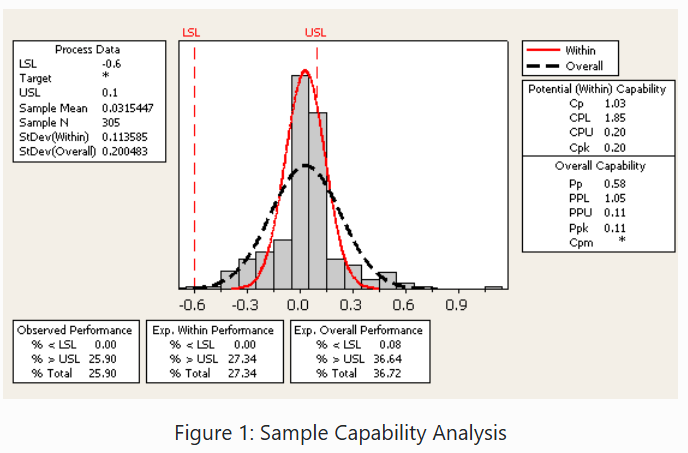
Subgroup Size Matters
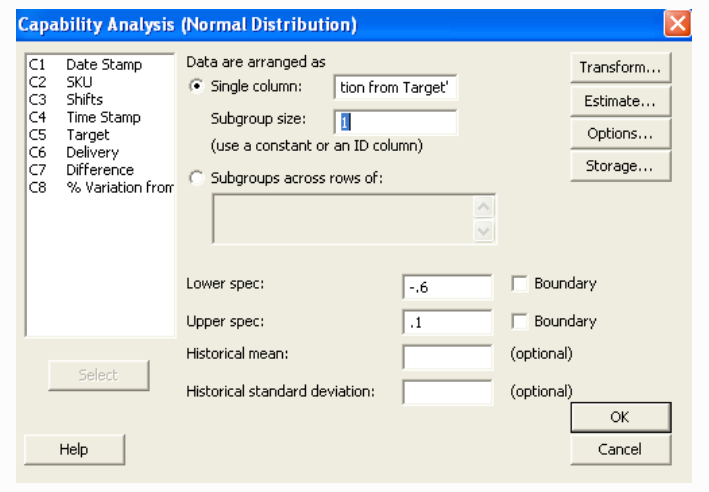
Benchmark and Goal-setting Analysis
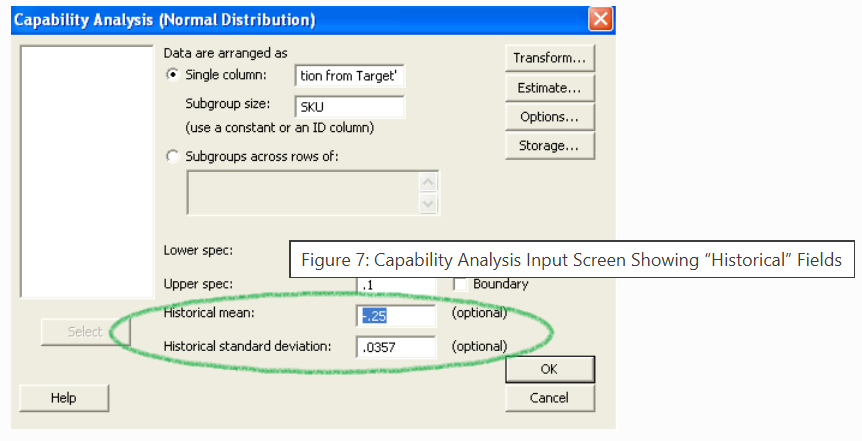
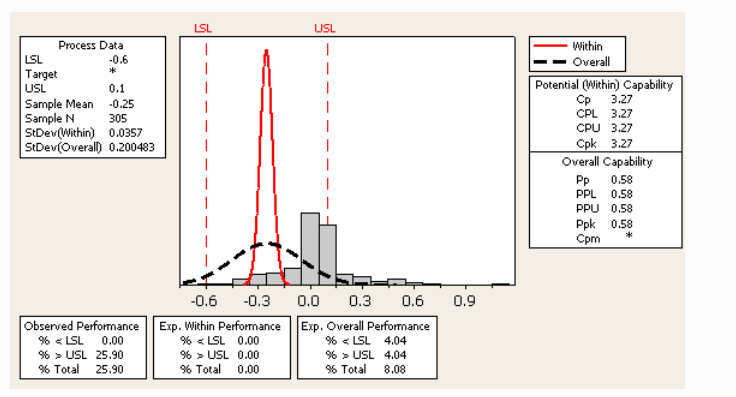
The Power of Capability Analysis
For more information,
Reach us at inquiry@mazecs.com
